Kasiya Rutile-Graphite Project investor Sovereign Metals has said the rehabilitation trials at its site in Lilongwe rural show that land restored after mining can boost crop yields from pre-mining levels.
The findings, presented yesterday when Minister of Agriculture, Irrigation and Water Development Roza Mbilizi toured the site, have eased fears relating to the project’s long-term impact on farming communities.
Sovereign Metals country manager Maxwell Kazako said the second year of trials recorded maize yields of 5.9 metric tonnes (MT) per hectare compared to the regional average of about one MT per hectare.
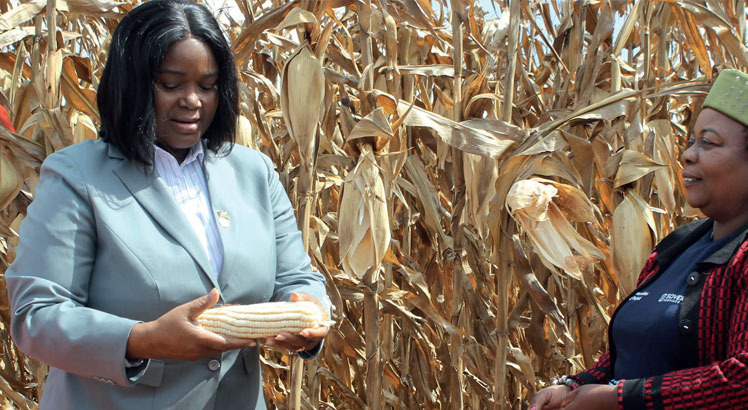
“The second year builds on the success of the first year, which confirmed that post-mining land can achieve superior agricultural productivity compared to pre-mining land,” he said.
Kazako said the trials have expanded beyond maize into a multi-cropping system that combines bamboo, winter beans, grass fodder and groundnuts.
He said results showed that maize and bamboo can co-exist with minimal competition, creating a system that supports long-term soil productivity while allowing bamboo to mature as a carbon and land remediation solution.
The rehabilitation exercise involved pilot mining, soil backfilling and restoration before cultivation, a process designed to demonstrate that land disturbed by mining can be returned to productive agricultural use.
In response, Mbilizi commended the company’s rehabilitation model, saying surrounding communities must continue benefitting from agriculture even as mining activities expand.
“The 5.9 tonnes per hectare yield is far above the national average of about two tonnes. If this initiative is scaled up and supported with irrigation, it could strengthen food security,” she said.
Traditional Authority Khongoni also hailed relations between the company and local communities, saying farmers involved in the two-year trial want continued support through a cooperative arrangement to sustain production gains.
Thirty-five smallholder farmers participated directly in the rehabilitation farming trials.
The Kasiya project’s definitive feasibility study, released in April, projects revenue of $16.2 billion over an initial 25-year mine life. Phase one construction is expected to begin in mid-2027.